Brian Dyson, CEO of Coca Cola once said:
Imagine life as a game in which you are juggling some five balls in the air. You name them – work, family, health, friends and spirit and you're keeping all of these in the air. You will soon understand that work is a rubber ball. If you drop it, it will bounce back. But the other four balls – family, health, friends and spirit are made of glass. If you drop any one of these, they will be irrevocably damaged or even shattered. They will never be the same. You must understand that and strive for balance in your life. "
Once upon a time riding off on a horse to conquer new lands or collecting pots of gold made you famous. Perhaps you'd even get a name in history if you were politically savvy.
Going away on a long voyage was a thing of courage that only the select few undertook! You were greeted off with really really warm hugs and kisses and good wishes from every one!
Today things are very different.
SUDDENLY THOSE HUGS AND KISSES ARE NOT SO WARM AS BEFORE!!
You are not at fault.
You are just the mouse whose cheese has moved!
Remember spending the evenings sitting by the fireside, sipping a glass of scotch and your friends hanging on to each word that you uttered while they drank your whiskey?
Today, who cares if you've been all over the world! They get the same thing in a syndicated fashion on the TV.
Does anybody care for you? Or for that matter do you care for them?
WHO CARES?
And that is fine. Unfortunately that is where the problem starts. What used to be "Success" in others’ eyes and "Satisfaction" to you earlier, now do not mean either.
Things have changed.
Information Technology has opened up our societies as never before. Some changes are good but some are surely not!
There is email to keep in touch with family. Telephone to talk to your friends, but the same instrument rings whenever Boss decides to have a chat.
The net helps us to maintain relationships with friends and families. Some of us find relief in taking a break from the daily work to browse. Looking for humor or satisfying a hobby. Thus stop deterioration of our mental health. On the other hand we could simply become an addict.
Just one decade back we felt exhilarated when Sparks could tune the HF so that we could make that important call from sea. Modern communication has shrunk the world into one single global village.
Suddenly there is no demand for mariners like us who could bring back tall tales of the sea and our exploits in distant shores.
You were a provider for your family. You were very caring and loving not just to your own family, but also to your extended family. To your friends you were the "greatest guy on earth". You provided for a home, and filled up that home with the comforts of amenities that kept your loved ones comfortable.
But something happened while you were away.
Each member of the family got their "Own Space" they wanted.
You Provided. But they forgot you.
Globalization hit you smack in the face. You tried hard not to slip off the edge as the world got flatter and flatter!
Economies have improved and there are lots of opportunities other than the sea. That's where the rub is for a middle-aged seafarer. Who is looking for a job ashore in another vertical specialization that will give him a comparable salary. Unfortunately the "past experience", certification and credibility in that new industry do not matter. With diminished opportunities some mariners choose to stay back at sea.
How does a seafarer address the problem of work-life balance that Brian Dyson advised? For a seafarer it's more like work on Mars (sea) and life on Venus (ashore)! How can they balance the two?
What a joke! Please take away ALL work from me and let me take my Sailboat to the Caribbean and just leave me alone! I'll take the life, you take the work! Please don't ask me to balance work and life! Where the boundaries of work and life do not meet how can one define which is work and which is life!
They talk of Compensation. There is an easy fix to many problems - throw money. Then there are some problems which no amount of money will solve.
Excerpts from an email posted in the Merchant Navy group. It reminded me of the times I used to sail. It is difficult to compare the life-style of a shippie with those who are ashore.
Saturday, May 29, 2010

Sunday, May 16, 2010
Navigation Made Easy
“I envied the navigators on big ships who work out the time on the Local Apparent Noon beforehand, at the proper time pick up their sextant and go out on the bridge-wing and shoot. Then back to the chartroom and in a minute have their latitude. Sometimes I wondered which was harder about my noon sights – the actual taking of the sight on the tossing deck or keeping my balance. Any slip on deck, especially with seas coming over, could mean a broken sextant. A few times I had taken a fall on my elbow and once I thought I had broken the instrument. It frightened me a little and I pasted a warning on the box
Thus wrote William Willis fifty years back describing his epic voyage all alone across the Pacific on a balsa raft. Willis hadn’t seen modern navigators with accurate GPS position being plotted real-time on electronic charts. The guy would had probably gone into a shock.
The old school of navigation is a dying art. When I started my career in 1979 the sextant was the most important tool in a ship. How many of the current crop of mariners have heard of sounding sextants. It is built specifically to measure horizontal angles. Two such angles taken simultaneously would give an accurate fix plotted with a station pointer.
Those days coastal navigation was an interesting subject. Taking over a watch meant we had to study the chart carefully, pick up the binoculars, go out on the bridge wing and for the next 10 to 15 minutes identify all the important coastal features. We learnt practical geography in a way which no classroom could match. The colour of the sea, the smell in the air all those things had some clues for us. Today, with GPS, the charm of navigation is no more there.
Hyperbolic position fixing systems were developed just after WWII. Decca was the one most commonly used by the navigators.
They laid various chains all over the world but mostly in Europe and Australasia. In India we had the Calcutta chain in the east and the Salaya chain in Gujarat. When the coast dipped out of visual sight the radio receivers helped us to fix our positions till about 300 kms from the stations.
The chains ceased to operate in March 2000 finally bowing out to satellite navigation. Terms such as hyperbolic fixes, lane slips and decca charts disappeared from our vocabulary.
In the early eighties the transit navy navigation satellite system (NNSS) appeared on the scene. We were witnessing a revolution in the making. Satellite navigation would shortly eclipse all other types of navigation.
The NNSS however, was not a threat to terrestrial navigation. We got one Sat fix during a four-hours watch. Acquiring the satellites was a long drawn out process. And it wasn’t always that one could get an acceptable fix. An accuracy of 1 mile was considered to be good. Apart from ocean navigation it was not of much use. Transit NNSS was retired in 1996.
By the nineties the GPS had become an integral part of our bridge. With the deliberately induced Selective Availability (SA) we got a fix accuracy of ± 100 metres. The best part about GPS was that it gave us continuous fixes. With GPS position systems Electronic Charts became a meaningful system.
The midnight of 31st December 1999 was a defining moment as far as celestial navigation was concerned. The techies had somehow managed to create the Y2K scare. As the roll-over to the new millennium approached closer the mariners showed an earnest interest in astro-navigation. I remember we were instructed by our superintendents to practice star sights as ‘GPS might not be available wef 01st Jan 2000.’
That particular night whilst the whole world was merry-making and ushering in the new millennium, I was on the ship hunched over the GPS and other equipment keenly awaiting the chaos predicted to descend on the earth. In the event nothing happened. It was the last time deck officers would seriously consider celestial navigation.
When the SA was discontinued in May 2000 the GPS dramatically improved its accuracy to ± 15 metres. Those who wanted still better accuracy could always install a Differential GPS receiver (± 5 mtrs).
In the quest to continuously improve the accuracy the agencies have come out with the Satellite Based Augmented Systems (SBAS).
Some of the SBAS are the Wide Area Augmentation System (WAAS) operational since 2003 in US, European Geostationary Navigation Overlay Service (EGNOS) which was commissioned a few months back and the MSAS in Japan. India (GAGAN) and China (Beidou) also have plans to provide such systems for both aircraft and marine navigation.
The WAAS has an accuracy of ± 1.5 meters depending on your geographic location.
In SBAS there is no need to carry a separate receiver to receive the satellite corrections. The same GPS receiver is good enough to get the corrections. No additional cost involved here. The other thing is that DGPS works quite close (150 miles) to the land-based reference station. Unlike in SBAS the coverage in DGPS is very limited.
Good news for mariners is that all these SBAS systems – WAAS, EGNOS and MSAS are compatible. One receiver is good enough. In the recent future I expect most ships to have augmented GPSs. With the cost of a receiver less than 50 dollars shipowners can place a number of augmented GPS receivers at strategic points of a big ship. All points of a vessel will be accurately traced in a tight maneuver. It would be very useful when entering docks or navigating in narrow rivers.
BUST YOUR BONE BUT SAVE THE SEXTANT.
Thus wrote William Willis fifty years back describing his epic voyage all alone across the Pacific on a balsa raft. Willis hadn’t seen modern navigators with accurate GPS position being plotted real-time on electronic charts. The guy would had probably gone into a shock.
The old school of navigation is a dying art. When I started my career in 1979 the sextant was the most important tool in a ship. How many of the current crop of mariners have heard of sounding sextants. It is built specifically to measure horizontal angles. Two such angles taken simultaneously would give an accurate fix plotted with a station pointer.
Those days coastal navigation was an interesting subject. Taking over a watch meant we had to study the chart carefully, pick up the binoculars, go out on the bridge wing and for the next 10 to 15 minutes identify all the important coastal features. We learnt practical geography in a way which no classroom could match. The colour of the sea, the smell in the air all those things had some clues for us. Today, with GPS, the charm of navigation is no more there.
Hyperbolic position fixing systems were developed just after WWII. Decca was the one most commonly used by the navigators.
They laid various chains all over the world but mostly in Europe and Australasia. In India we had the Calcutta chain in the east and the Salaya chain in Gujarat. When the coast dipped out of visual sight the radio receivers helped us to fix our positions till about 300 kms from the stations.
The chains ceased to operate in March 2000 finally bowing out to satellite navigation. Terms such as hyperbolic fixes, lane slips and decca charts disappeared from our vocabulary.
In the early eighties the transit navy navigation satellite system (NNSS) appeared on the scene. We were witnessing a revolution in the making. Satellite navigation would shortly eclipse all other types of navigation.
The NNSS however, was not a threat to terrestrial navigation. We got one Sat fix during a four-hours watch. Acquiring the satellites was a long drawn out process. And it wasn’t always that one could get an acceptable fix. An accuracy of 1 mile was considered to be good. Apart from ocean navigation it was not of much use. Transit NNSS was retired in 1996.
By the nineties the GPS had become an integral part of our bridge. With the deliberately induced Selective Availability (SA) we got a fix accuracy of ± 100 metres. The best part about GPS was that it gave us continuous fixes. With GPS position systems Electronic Charts became a meaningful system.
The midnight of 31st December 1999 was a defining moment as far as celestial navigation was concerned. The techies had somehow managed to create the Y2K scare. As the roll-over to the new millennium approached closer the mariners showed an earnest interest in astro-navigation. I remember we were instructed by our superintendents to practice star sights as ‘GPS might not be available wef 01st Jan 2000.’
That particular night whilst the whole world was merry-making and ushering in the new millennium, I was on the ship hunched over the GPS and other equipment keenly awaiting the chaos predicted to descend on the earth. In the event nothing happened. It was the last time deck officers would seriously consider celestial navigation.
When the SA was discontinued in May 2000 the GPS dramatically improved its accuracy to ± 15 metres. Those who wanted still better accuracy could always install a Differential GPS receiver (± 5 mtrs).
In the quest to continuously improve the accuracy the agencies have come out with the Satellite Based Augmented Systems (SBAS).
Some of the SBAS are the Wide Area Augmentation System (WAAS) operational since 2003 in US, European Geostationary Navigation Overlay Service (EGNOS) which was commissioned a few months back and the MSAS in Japan. India (GAGAN) and China (Beidou) also have plans to provide such systems for both aircraft and marine navigation.
The WAAS has an accuracy of ± 1.5 meters depending on your geographic location.
In SBAS there is no need to carry a separate receiver to receive the satellite corrections. The same GPS receiver is good enough to get the corrections. No additional cost involved here. The other thing is that DGPS works quite close (150 miles) to the land-based reference station. Unlike in SBAS the coverage in DGPS is very limited.
Good news for mariners is that all these SBAS systems – WAAS, EGNOS and MSAS are compatible. One receiver is good enough. In the recent future I expect most ships to have augmented GPSs. With the cost of a receiver less than 50 dollars shipowners can place a number of augmented GPS receivers at strategic points of a big ship. All points of a vessel will be accurately traced in a tight maneuver. It would be very useful when entering docks or navigating in narrow rivers.
Friday, April 30, 2010
Scripting a New India
“Capt. Raj?”
“Speaking.”
“Hi, this is Capt Jagan here. How are you?”
“Oh Hi.” I had spoken to Jagan a couple of times before. He used to be the master of a VLCC when his ECDIS had a problem. Later he joined Essar office.
“I didn’t know you are a charged hydrographic surveyor,” he said with a laugh,
“How do you charge a surveyor by the way? Do you put a 220V through him?”
I laughed.
“We need your signature to authenticate a hydrographic survey that we have carried out.”
“For what?” I asked, “Are you submitting the survey to the HO?”
“No no. This is a requirement of the state maritime board.”
A week later one fine morning, all of a sudden I got a call from Jagan,
“Sorry for the short notice. Can you come to Hazira today?”
"How long does it take by taxi?” I asked.
“Five hours.”
Provided you had a top-end car and there was no traffic, which he forgot to tell me. It took me nine hours to muster a good car, grab an overnighter bag and reach the Essar office at Hazira. On the highway I found lots of construction going on. The Surat to Mumbai highway was going to become world-class.
”Kab tak ho jayega?” I asked the driver. Before the next monsoon he told me. Meanwhile my left hand was clutched on the handle bar and my right on my heart, as the fast car zoomed through the traffic. It was swerving in and out overtaking all kinds of trucks forming an endless line to Gujarat.
So there I was. Back in Essar. I had sailed in Essar ships ten years back. I felt I was back amongst familiar surroundings and known people.
Rao is the boss of that unit. An old timer who has been through the ups and downs of the company, many downs till this dizzying ‘up’ happened. He inherited the chair from a retired admiral who didn’t wait for the good times to come. Rao has a band of hard working people under him.
I knew Manoj from the Navy. Both of us were from the hydrographic branch. Jagan Lal is a workhorse. He has carried the hectic life of a ship during loading/discharging to this shore post. Somebody should tell him to relax. Unlike a ship which has a fixed tenure that ends after a few months, here on-shore life goes on and on and on… I was meeting these guys at a port terminal being built by Essar.
Hazira is, or till recently was, a god-forsaken place. Essar has an iron ore plant here where they make hot-bricketed iron (HBI). It has a market in the far-east – Japan, Korea and now increasingly to China. A new port is coming up here. Lot of infrastructure is being built. A new face of India is being scripted here.
On the other side of the road Essar has built a township. On land that had being reclaimed from the sea. I am not sure if ‘reclaimed’ is the right word. Because as Leslie Forbes wrote in ‘Bombay Ice’
“How do you reclaim something that was never yours in the first place?”
Nevertheless, from the swampy wastelands Essar has created Nand Niketan, a paradise of a place. There is greenery all around. The place is well planned and well managed. It has all amenities available such as play-grounds, swimming pool, schools, and shopping centers including a mall. So much so, that the 7000 fortunate residents hardly feel the need to go to the big city 18 kilometers away.
In the Essar office Jagan appeared a little pressurized. “What are your charges?”
I said “Look, I don’t know what the job is. Anyway, what is the hurry?”
Jagan got a little more pressurized.
“You have to simply put your signature and authenticate the survey.”
“For whose benefit?”
“For the benefit of the maritime board. They want a charge surveyor to authenticate the survey.”
Jagan mentioned a figure. I nodded my assent to his great relief.
The hydrographic surveyor from the maritime board came in. He was a chilled out fellow. It turned out we had served on the same ships. We knew many of the old timers from the branch. We got along well.
“Kabhi aaiye GMB mein. Main aapko wahan set kara doonga.”
I gave him my charming smile.
I was impressed by the developments Essar and its employees had wrought upon Gujarat. They are pumping funds in Jamnagar and Hazira. Transforming the non-descript places on the map into modern cities.
If somebody wants to see how infra-structure should be developed out of nothing they should visit these places.
Postscript – Some names have been changed to protect the identities.
“Speaking.”
“Hi, this is Capt Jagan here. How are you?”
“Oh Hi.” I had spoken to Jagan a couple of times before. He used to be the master of a VLCC when his ECDIS had a problem. Later he joined Essar office.
“I didn’t know you are a charged hydrographic surveyor,” he said with a laugh,
“How do you charge a surveyor by the way? Do you put a 220V through him?”
I laughed.
“We need your signature to authenticate a hydrographic survey that we have carried out.”
“For what?” I asked, “Are you submitting the survey to the HO?”
“No no. This is a requirement of the state maritime board.”
A week later one fine morning, all of a sudden I got a call from Jagan,
“Sorry for the short notice. Can you come to Hazira today?”
"How long does it take by taxi?” I asked.
“Five hours.”
Provided you had a top-end car and there was no traffic, which he forgot to tell me. It took me nine hours to muster a good car, grab an overnighter bag and reach the Essar office at Hazira. On the highway I found lots of construction going on. The Surat to Mumbai highway was going to become world-class.
”Kab tak ho jayega?” I asked the driver. Before the next monsoon he told me. Meanwhile my left hand was clutched on the handle bar and my right on my heart, as the fast car zoomed through the traffic. It was swerving in and out overtaking all kinds of trucks forming an endless line to Gujarat.
So there I was. Back in Essar. I had sailed in Essar ships ten years back. I felt I was back amongst familiar surroundings and known people.
Rao is the boss of that unit. An old timer who has been through the ups and downs of the company, many downs till this dizzying ‘up’ happened. He inherited the chair from a retired admiral who didn’t wait for the good times to come. Rao has a band of hard working people under him.
I knew Manoj from the Navy. Both of us were from the hydrographic branch. Jagan Lal is a workhorse. He has carried the hectic life of a ship during loading/discharging to this shore post. Somebody should tell him to relax. Unlike a ship which has a fixed tenure that ends after a few months, here on-shore life goes on and on and on… I was meeting these guys at a port terminal being built by Essar.
Hazira is, or till recently was, a god-forsaken place. Essar has an iron ore plant here where they make hot-bricketed iron (HBI). It has a market in the far-east – Japan, Korea and now increasingly to China. A new port is coming up here. Lot of infrastructure is being built. A new face of India is being scripted here.
On the other side of the road Essar has built a township. On land that had being reclaimed from the sea. I am not sure if ‘reclaimed’ is the right word. Because as Leslie Forbes wrote in ‘Bombay Ice’
“How do you reclaim something that was never yours in the first place?”
Nevertheless, from the swampy wastelands Essar has created Nand Niketan, a paradise of a place. There is greenery all around. The place is well planned and well managed. It has all amenities available such as play-grounds, swimming pool, schools, and shopping centers including a mall. So much so, that the 7000 fortunate residents hardly feel the need to go to the big city 18 kilometers away.
In the Essar office Jagan appeared a little pressurized. “What are your charges?”
I said “Look, I don’t know what the job is. Anyway, what is the hurry?”
Jagan got a little more pressurized.
“You have to simply put your signature and authenticate the survey.”
“For whose benefit?”
“For the benefit of the maritime board. They want a charge surveyor to authenticate the survey.”
Jagan mentioned a figure. I nodded my assent to his great relief.
The hydrographic surveyor from the maritime board came in. He was a chilled out fellow. It turned out we had served on the same ships. We knew many of the old timers from the branch. We got along well.
“Kabhi aaiye GMB mein. Main aapko wahan set kara doonga.”
I gave him my charming smile.
I was impressed by the developments Essar and its employees had wrought upon Gujarat. They are pumping funds in Jamnagar and Hazira. Transforming the non-descript places on the map into modern cities.
If somebody wants to see how infra-structure should be developed out of nothing they should visit these places.
Postscript – Some names have been changed to protect the identities.
Wednesday, April 28, 2010
Feedbacks

‘When do you sleep?’ I asked.
“Isn’t that boring?”
At midnight my ex Navy friend, now well settled in Singapore, was taking us around in his spacious SUV. I was having trouble trying to keep my eyes open. According to that fellow Singaporeans found ‘sleeping’ a boring activity. The families sitting behind laughed.
On the roads there was quite a bit of traffic. Some pedestrians on the sidewalks. The scene outside resembled a normal evening in any of the cities around the world. But this was past midnight.

Whereas OEMs are enthusiastic about embracing every new technology that comes their way, ship-operators are more circumspect. Their attitudes towards new gizmos was summed up as:
"Keep looking out of the window because, When technology becomes your Master you can navigate faster to disaster.”
One shipping superintendent gave a realistic picture of how his company was dealing with ECDIS, digital charts, AIS, GMDSS and other peripheral developments that have invaded the bridge in the recent years.
The people who run the ship – Master, Chief, Second are not very highly educated. Most of them do not have a college degree. After school they do a few months of specialized training from an institute before joining the ship as a cadet. The real training begins then.
Without any formal degree deck officers are expected to grapple with the sophisticated equipment arraigned on the bridge. A guy is considered knowledgeable if he can master the operating manual of a fitted equipment. Most times the fellow memorizes the one page instruction sheet that is attached as a quick reference guide to the instrument. But then he is a practical fellow. Faced with operating a huge vessel in a real world where a moment’s lapse could result in a spectacular incident the OOW finds out all that is useful about the equipment from the point of view of running a ship.
My instinct says that OEMs who have developed a system in response to the industry feedback stand a better chance against those that have been developed by highly technical engineers and scientists ensconced in their cubicles but cut off from the real world.
C-Map digital charts was created purely from the point of view of the navigator. It was modeled according to the market response. It has succeeded despite there being no regulations forcing its usage. On the other hand the ENC is an IMO/IHO creation. Howsoever well-meaning they are but they have not catered for the user feedback. There are hardly any users to start with so where is the useful feedback?
S-57, S-63, ENC, SENC, RENC, WEND are all alien words to the bridge OOWs. Even today, at least in India, books on the subject haven’t yet penetrated to competency students. As such, students retain at most 10% of what is taught in the classroom. Rest of the knowledge comes from the field through practical usage. The majority of ships out there do not have ECDIS. The percentage of ships fitted with ECDIS hardware could be 10% or 5% or even less.
When the bridge OOW sees an ECDIS he doesn’t realize that as per the definition it would not qualify as a proper ECDIS. Maybe as an ECS, but not as an approved ECDIS. Truthfully speaking even a properly approved ECDIS might become an ECS without the knowledge of the user if the ENCs that he uses are not up-to-date. There would be no alarm because there is no specific definition for an up-to-date chart. Up-to-date as of when? A month, a fortnight, a week or a day? Even the hydrographic offices have not reached a consensus amongst themselves how often to issue corrections.
Back on the bridge the OOW doesn’t know (as yet) that he doesn’t have ENCs on board. Maybe raster charts or some other vector charts. So they learn to use ARCS, C-Map or Transas charts. Unfortunately for him the rules are ambiguous. SOLAS has a definition for the vector ENCs but is not clear about non-ENCs. In the absence of specific information some of them feel C-Map is ENCs.
“Isn’t it vector?”
Sealing the argument by implying that raster is non-standard and vector is better. And acceptable.
When some owners buy ENCs to go along with C-Map the OOWs realize that in certain parts of the world C-Map is far better than the ENCs.
Mariners talk amongst themselves. C-Map comes out tops mainly because it was there not because it was mandated but because it was useful. ENCs are considered heavy, complicated, time-consuming, difficult to select from chart catalogs and expensive. After all that unraveling of instructions and breaking your head the official charts turn out to be a damp squib.
The next few years are going to be interesting. Let’s see whether the seafarers who come under the SOLAS regime will get their choice of charts on the bridge.
Sunday, April 25, 2010
The Trip to Singapore

It was a rare event for the family. One that happens probably once in five years or something. We realized it. We took in the sights knowing that those cherished images weren’t going to disappear from our memories soon.
A lot of planning went into the trip. A friend of a friend living in Singapore was traced. Isn’t his wife a homely person? How old was the daughter? The age of the daughter of the friend of a friend was a careful bit of information catered for in our meticulous plan.
So there we were at Changi airport. Two sheets of paper containing our itinerary was clutched tightly in my fist. They were already showing signs of wear and tear. Our trip was yet to begun.
‘What is the next step?’ Swipe some Singapore dollars. SGD 500 to be precise.
But where is that limo that the hotel promised?
“Did you ask for confirmation from the hotel?” asked my 22 year old son.
‘No, but I thought it was part of the deal.’
I got some accusing looks. “Nothing forms part of a deal till you confirm it”, he tells me sagely.
I swiped the card. Entered the memorized pin number. Which would soon be forgotten once the travel card got over.
‘Joy, here’s your 50 dollars. Be careful. I want an account before you get the next 25.’
‘I suggest we take a taxi to the hotel. Not the Chrysler one though.’
The family heaved a sigh of relief. Though willing, but lugging the heavy bags on an MRT or a bus was a daunting prospect.
The trip to the hotel was nice. Very nice. The hotel was nicer. Going up to the 32nd floor on a lift through which we could see the Singapore skyline was wonderful.
The week passed like a dream. We had a lovely holiday.
“Dad, when will our country ever become like this?”
I thought hard about it. I listed out a few things which, in my personal opinion, as countrymen we must admit to ourselves honestly and do something about it.
- Sanitation. And by extension plumbing.
Till our country learnt proper hygiene, cleanliness and sanitation we will continue to spoil the countryside with open-air toilets. Similarly we needed good plumbing. We have good plumbers. Unfortunately these guys emigrate to Dubai and probably Singapore where they get a better price for their skills.
We must slot the plumbers and sanitation workers higher up in our social status. This is not so much of an infrastructure problem, more of a social kind.
As long as we tolerated the lôtă and the field toilets we remained doomed to our squalid fate.
- Bureaucracy.
A government servant by definition is exactly what it says - a servant. Available for service to the public and not the other way around. When the government employees are elevated to become masters of the masses, when we give them the highest social status then we pay a price for it. How come these guys enjoy special privileges that a common citizen doesn’t? For example some of them sport different-colored blinking lights which goes with a blaring horn to pierce through the mad traffic. Come to think of it. The traffic got worse only because those administrators who were supposed to address this issue were merrily roaming around with multi-colored contraptions fitted on top of their car. How come we never noticed, albeit in our short stay at Singapore, no such traffic-piercing vehicles?
I despair what damage job-reservations in the government for the under-privileged must have done to the country. It implies that the government jobs are goodies to be shared with the have-nots. Rather than making the entry harder so that the most committed would strive for a government job, it has become a piece of pie which can be manipulated to be obtained for oneself.
It makes me feel we are doomed for a few more centuries till we clear up this particular mess in our country.
- Air Quality (As also Water Purity).
We are prone to burning things. After all it is ordained in our ancient culture. We forget that in the olden days burning was a sort of purifying process against the forest all around and the forest-insects.
Today we have burnt away a good piece of our beautiful country in the name of purification.
Take any ceremony or any rite and we burn wood and ghee. A havan in a marriage is a must. Even cremation by burning logs for that matter. Burning degrades the air around us. I am not even talking about global-warming.
I am concerned about the everyday practice of lighting fires in our cities. Burning a garbage-heap doesn’t make it disappear. Instead of the garbage being gathered in one place it has only spread more effectively around the neighborhood.

Sunday, March 28, 2010
A Fishing Boat vs an Oil Rig
Recently I was at the port of Kochi (Cochin) with a group of scientists. We were there to test an electronic charting system (ECS) on board a fast attack-craft.
The program was to go in the morning and return by afternoon. We reached the small ship after crossing the elaborate naval security. The Commanding Officer, a young Long G (gunner) told us that the sortie could get a little delayed because his ship had also been tasked to shoo away a fishing vessel which was apparently pestering an oil-rig exploring for energy offshore.
Our plan was simple. Rig up the GPS. Set up the laptop. Connect the ECS to the GPS and AIS and get the system running. Out at sea we encountered our first snag that threatened to derail the whole exercise. The serial port to USB connector was missing. We could not connect the GPS to the laptop. It meant our electronic charting system wouldn’t function. I tried to connect the laptop’s blue tooth with another wi-fi GPS but it wasn’t working satisfactorily.
The chief scientist, an old experienced hand, said,
“I have my personal laptop. It has a nine-pin serial connector.”
The day was saved. I quickly loaded the ECS software, activated the charts with the license and connected the GPS to the serial port. The system was up and running in no time.
The ship had a tiny bridge. On top of that the CO was an aggressive fellow shouting at one and all. With all that shouting and movement we could not do our job. The mark of a good seafarer is that he can improvise on the spot. We shifted to the navigating officer’s night cabin and commissioned it into a temporary lab.
The whole day we tested the system and conducted practical training for the group of participants.
In the middle of the training the ship was stopped. They had to carry out diving at sea. Compared to a steaming ship, a stopped ship rolls much more due to the effect of waves. Most of us got a little queasy.
In the afternoon, once diving was completed the ship proceeded at full speed to open sea towards the deepwater rig to chase the trouble-maker fishing boat. The sea had picked up meanwhile. I felt a little tired. I had forgotten how bad it was on a small, noisy ship which rolled and pitching uncomfortably in sea-state 5.
I didn’t envy the CO’s job. He had to scream a lot to get the work done. I decided to never ever complain about my present job.
It was so uncomfortable I couldn’t sit anywhere. I didn’t even feel like taking notes though there were enough activities going on.
Finally we reached the oil-rig about 100 miles from the coast. There was a small miserable fishing boat close by. Doing nothing.
A naval sailor took out a loud-hailer.
Hie! Shouted the sailor in the local tongue malayali . Get out of this place. C’mon. Scram!
Nothing happened. After fifteen minutes of hollering and circling around the small boat, a wizened old dark fellow crawled out on to the deck. He was wearing just a lungi and was bare from waist upwards. The poor fellow looked at us silently. He gestured in futility at the oil rig. Then he went inside to start the boat engines.
Look at the irony of his situation. This is his fishing ground. For generations he and his ancestors have fished in this place. Out of nowhere this big oil-rig has moved in and disrupted his life.
His fishing ground was encroached upon by the foreign vessel manned by foreigners. When he protests, they put the Navy on him to shoo him away. By his logic this Navy should be protecting him instead.
After all, what was the guy doing? He is just a small fisherman. Trying to earn his livelihood by catching fish which you and me will eat. In this modern age he is already handicapped by the lack of sophisticated boats and equipment.
I mentioned this to the CO. He agreed with me whole-heartedly. But he has to obey the orders.
‘I have to report back to the headquarters.’
He is just a decent cop. He wasn’t paid to take anybody’s sides.
‘Why can’t he fish somewhere else?’
Try telling that to the fisherman. He will fish where he finds the fish. Not somewhere else. These were his fishing grounds.
After another ten minutes when the boat started to move away slowly the CO gave orders to head back towards the shore. For all he knew the fishing boat would turn back when he finds the Navy ship gone.
The CO didn’t care. He will make a report to the HQ and get on with his life.
The program was to go in the morning and return by afternoon. We reached the small ship after crossing the elaborate naval security. The Commanding Officer, a young Long G (gunner) told us that the sortie could get a little delayed because his ship had also been tasked to shoo away a fishing vessel which was apparently pestering an oil-rig exploring for energy offshore.
Our plan was simple. Rig up the GPS. Set up the laptop. Connect the ECS to the GPS and AIS and get the system running. Out at sea we encountered our first snag that threatened to derail the whole exercise. The serial port to USB connector was missing. We could not connect the GPS to the laptop. It meant our electronic charting system wouldn’t function. I tried to connect the laptop’s blue tooth with another wi-fi GPS but it wasn’t working satisfactorily.
The chief scientist, an old experienced hand, said,
“I have my personal laptop. It has a nine-pin serial connector.”
The day was saved. I quickly loaded the ECS software, activated the charts with the license and connected the GPS to the serial port. The system was up and running in no time.
The ship had a tiny bridge. On top of that the CO was an aggressive fellow shouting at one and all. With all that shouting and movement we could not do our job. The mark of a good seafarer is that he can improvise on the spot. We shifted to the navigating officer’s night cabin and commissioned it into a temporary lab.
The whole day we tested the system and conducted practical training for the group of participants.
In the middle of the training the ship was stopped. They had to carry out diving at sea. Compared to a steaming ship, a stopped ship rolls much more due to the effect of waves. Most of us got a little queasy.
In the afternoon, once diving was completed the ship proceeded at full speed to open sea towards the deepwater rig to chase the trouble-maker fishing boat. The sea had picked up meanwhile. I felt a little tired. I had forgotten how bad it was on a small, noisy ship which rolled and pitching uncomfortably in sea-state 5.
I didn’t envy the CO’s job. He had to scream a lot to get the work done. I decided to never ever complain about my present job.
It was so uncomfortable I couldn’t sit anywhere. I didn’t even feel like taking notes though there were enough activities going on.
Finally we reached the oil-rig about 100 miles from the coast. There was a small miserable fishing boat close by. Doing nothing.
A naval sailor took out a loud-hailer.
Hie! Shouted the sailor in the local tongue malayali . Get out of this place. C’mon. Scram!
Nothing happened. After fifteen minutes of hollering and circling around the small boat, a wizened old dark fellow crawled out on to the deck. He was wearing just a lungi and was bare from waist upwards. The poor fellow looked at us silently. He gestured in futility at the oil rig. Then he went inside to start the boat engines.
Look at the irony of his situation. This is his fishing ground. For generations he and his ancestors have fished in this place. Out of nowhere this big oil-rig has moved in and disrupted his life.
His fishing ground was encroached upon by the foreign vessel manned by foreigners. When he protests, they put the Navy on him to shoo him away. By his logic this Navy should be protecting him instead.
After all, what was the guy doing? He is just a small fisherman. Trying to earn his livelihood by catching fish which you and me will eat. In this modern age he is already handicapped by the lack of sophisticated boats and equipment.
I mentioned this to the CO. He agreed with me whole-heartedly. But he has to obey the orders.
‘I have to report back to the headquarters.’
He is just a decent cop. He wasn’t paid to take anybody’s sides.
‘Why can’t he fish somewhere else?’
Try telling that to the fisherman. He will fish where he finds the fish. Not somewhere else. These were his fishing grounds.
After another ten minutes when the boat started to move away slowly the CO gave orders to head back towards the shore. For all he knew the fishing boat would turn back when he finds the Navy ship gone.
The CO didn’t care. He will make a report to the HQ and get on with his life.
Sunday, March 14, 2010
A Real Hero
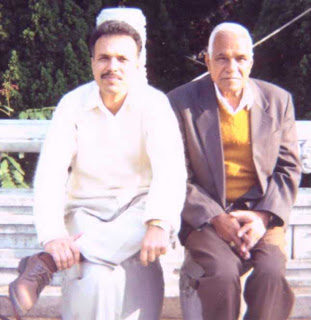
Last year, when my son was assigned a project on Corporate Social Responsibility in shipping industry, I gave him Capt Raj Goel’s contact to follow up.
Raj Goel was quite nice about the whole thing. He gave the youngster a detailed interview. He took his time to explain his responsibilities and specifically what his company was doing towards corporate social responsibility.
We hope we are doing our little bit for the industry by making our ports safe and secure for the ships.
At that time I didn’t know who exactly was Raj Goel and his claim to ‘fame’.
Back in 1996 I decided to leave the Navy to go into commercial shipping. The next three years I did the rounds of the maritime college. I was appearing for Master (Foreign Going) competency exams as well as going through the numerous modular courses.
During this period amongst our shipping circles we used to hear stories about an Indian Master who was languishing in a jail in Taiwan. Apparently his ship had collided with a fishing trawler killing some fishermen. The Master was all alone in an alien land.
I used to feel uneasy listening to the rumors about him. Since it had happened to a stranger it all seemed a little remote and unreal.
Some months back another Indian Master, Capt Glen Aroza’s name popped up in the shipping circles. He had been arrested after his ship had collided with a boat off Taiwan causing the death of some fishermen.
The news on the net said that it was virtually a repeat of Capt Raj Goel’s incident. It dawned on me that they were talking about the same fellow.
Our offices were in the same building. Sometimes I met Raj in the premises but at no point during our association of 3 years he let out the terrible ordeal that he had undergone in the past.
I trawled the net and came across the site where Raj had posted details of his detention at Keelung, a port in Taiwan.
I went to meet the gentleman. As usual he welcomed me with a smile. He shut down his laptop, got up from his chair and shook hands with me.
Over a cup of tea he told me his story.
Coming back to sea after a 5 month lay-off, he had just taken over as the Master of a big container vessel on 04th February ‘96. The ship sailed out from Hong Kong bound for Los Angeles. That same night the incident happened.
The third officer was on watch on the bridge that time. He had given a hard wheel to avoid a boat. He called the Master after the course alteration. Raj came up on the bridge to assess the situation. They didn’t find anything amiss. They didn’t realize that the ship had gone over the net of a trawler.
Later during the investigations it was concluded that the long wire of the trawler had snagged upon the bow of the huge ship. The boat had dragged behind till it capsized.
Meanwhile the net had fouled the propeller. Within the next few hours the propeller RPM came down and the ship’s speed reduced. The ship decided to enter Taiwan to get her propellers checked. In the port the police came on board. The Master and the third officer were arrested.
From being the Master of a huge ship with a spacious captains cabin Raj Goel found himself in a 7’ x 10’ filthy cell sharing the space with four petty criminals. For the next five and half months he remained in this cell without bail.
In my clear conscience I could not comprehend what is it that I have done to deserve this treatment. One day I was Captain of a ship and the next day I found myself in a small prison cell in an unknown land.
‘Was the judge harsh on you?’ I asked.
Raj shook his head. “The judge was nice. He couldn’t give me bail immediately because then the fishermen lobby would had got angry.”
When he finally got bail the P&I club arranged for a house for the three Indians – the Master, third and the able-seaman. The AB left shortly because there was no case against him. He was actually the duty AB on paper. He was never on the bridge when the incident happened.
Raj was detained for the next three years waiting for the law to take its own course. At the end the courts found him innocent and acquitted him of all charges. He was allowed to return to India.
‘Did the Indian government help’, I asked.
“No. Our government doesn’t do much. Had it been an American or European citizen or even a Taiwanese for that matter their government takes up their causes very strongly.”
The ordeal had taken its toll. His family suffered when he was far away and helpless to do anything. Raj Goel was an unfortunate victim of criminalization of seafarers. In any marine incident the ship and the master in an alien country becomes a soft target.
What sustained him through all those years?
“Letters written by children telling me not to worry, that they were praying to God. Those letters are my prized possessions today.”
After returning to India he was sitting at home without a job for over a year. Yet he didn’t allow this terrible episode to overwhelm him. After five years he finally got a job. He sailed for another three years and then switched over to a shore job. In 2007 he joined Silver Port Services because it offered more challenges.
Today by any yardstick he is a successful man. He wants to contribute to the same industry that had ditched him earlier.
Said Susruto Das, his batchmate from TS Rajendra, "Goel is a very helpful chap. Today he has a nice family with two lovely kids and a flat on Palm Beach Road."
When my son went to him with his project, he was patient with him. He gave his precious time to answer the questions with all sincerity. He never let the boy feel how busy he was or how great his position.
I never detected any bitterness in Raj. For sure he has enough reasons. He never cried how unfair the world was or why me? On the contrary he always has a smile on his face. He quietly performs a high-pressure job. If at all he has a mild complaint it is about the work pressure that is catching up.
Today he doesn’t mind raking up his unpleasant past because "he feels that experiences and knowledge are only worth if they can help others."
Amazing!
To me he is a real hero. I wish I can claim the same determination the gentleman has. To beat back all that life could throw at him and emerge victorious. And never utter a word of it.
I am privileged to share my first name with him.
--------------------------------------------------

Subscribe to:
Posts (Atom)

